
Table of Contents
Where To Shoot: 10 Incredible Photography Spots In And Around Haworth
Haworth has a reputation that feels much bigger than the village itself. Perched on the edge of the Pennines in West Yorkshire, it blends steep cobbled streets, Victorian stonework and open moorland that seems to run straight into the sky. It is famous as Brontë country, but for photographers it is also one of the most concentrated “story worlds” in England, ideal for fine art landscapes, moody portraits and even film-style narrative shoots.
Although the village has only a few thousand residents, it welcomes tens of thousands of visitors each year, drawn by the Brontë Parsonage, the steam railway and the hills that inspired Wuthering Heights.That mix of literary heritage and elemental weather means you can walk out of a tea room and, within minutes, be shooting on exposed moorland that looks almost untouched by time.
Why Haworth Is A Gift For Landscape And Fine Art Photography
The basic ingredients are simple: height, weather and texture. The moors above Haworth are part of the wider Pennine uplands, with open peat, rough grass, heather and dry-stone walls that break the horizon into bold graphic lines. On overcast days the tones collapse into a narrow, muted palette that suits fine art black-and-white work; in late light the same slopes glow bronze and purple.
Haworth’s visitor numbers are still modest compared with the big national parks, but the village’s literary fame punches above its size. One travel guide notes around 80,000 visitors a year, while recent reporting on the newly opened Brontë birthplace in nearby Bradford talks about Brontë tourism bringing almost a million visitors annually to Haworth and its surroundings. From a photographer’s point of view, that matters: it means infrastructure, accommodation and transport are geared up for people who want to spend full days exploring the landscape.
The region’s cinematic potential is no longer a secret either. VisitBritain highlights Yorkshire and the Humber as one of Britain’s key film and TV regions, citing windswept moors, historic towns and industrial heritage as core visual assets. In Haworth itself, Screen Yorkshire points out that Main Street and the parsonage have appeared in productions from the original The Railway Children to its recent sequel, and in the Brontë drama To Walk Invisible. If you are thinking in terms of movie-set potential, you are in good company.
- Compact area: village, moor, reservoirs and railway all within a short drive or day’s walk
- Strong seasonal contrast: snow, heather bloom, low winter sun and heavy summer showers
- Readable “stories” in the landscape: paths, walls and sightlines that naturally guide the eye
- Reliable access: regular trains to Keighley, bus links and well-marked footpaths
Key point
Haworth compresses village, moorland and film-ready heritage into a small, walkable area, which makes it unusually efficient for building a varied portfolio in just a few days.
How To Plan Your Shoot Around The Moors And Village
Treat Haworth as half landscape location, half historic set. Weather on the moors can shift quickly, even in late spring, so plan clothing and timings as if you were heading into a small mountain environment. Layers, waterproofs and decent boots are essential, especially if you are carrying a tripod and a couple of lenses on uneven flagstones and peat. Aim for early morning or late afternoon on the hills, reserving the middle of the day for village scenes when flat light can actually help with cobbles and stone façades.
Changeable skies mean you will often be working with high contrast between bright clouds and dark stone. It is worth exposing with an eye to protecting highlights so you can recover the detail in shadow later, instead of trusting a quick mobile photo enhancer to fix everything in two taps. Shooting in RAW, bracketing a series and checking histograms in the field remains the most robust way to preserve dynamic range for fine art prints.
Research on visitors to the nearby Yorkshire Dales National Park found that 96 percent of those surveyed described themselves as very satisfied with their visit, a figure that has risen steadily over the last two decades. While Haworth itself sits just outside the Dales, it benefits from the same culture of well-maintained rights of way and clear signage. In practical terms, that means many of the classic photographic routes are on established paths, which reduces your risk of trespassing on farmland or damaging fragile peat.
For most photographers, a lightweight but sturdy kit is enough:
- A wide-angle lens (around 16–24 mm) for village streets and big skies
- A standard zoom or short telephoto for compressing moorland layers
- A travel tripod for long exposures at waterfalls and dusk shots on the hills
- Neutral-density or graduated filters if you like in-camera control of sky and water
Key point
Plan Haworth as a sequence: village textures in softer light, moorland drama at the edges of the day, and always with clothing and kit chosen for fast-changing upland weather.
10 Great Photography Spots In And Around Haworth

Once you are on the ground, it helps to think of your day as a loose narrative, moving from intimate details to wider establishing shots. Many visiting photographers carry a small notebook to log exact viewpoints, times and weather, so that they can later sequence images into coherent bodies of work rather than a random set of pretty views. That is when a careful edit, rather than another automated photo enhancer effect, can make the difference between travel snaps and a gallery-ready series.
1. Main Street, Haworth
The steep, cobbled main street is the obvious starting point. Early morning is best, before day-trippers fill the frame, when the light rakes across stone setts and old shopfronts. Pick a low vantage point, almost at ankle height, to exaggerate the curve of the street, then step back and work with longer focal lengths to flatten the perspective and bring distant gables closer.
For a character-driven session, ask a friend or model to walk up the hill with a coat caught by the wind, head turned slightly towards the parsonage. Set your shutter speed fast enough to freeze the movement but keep the background just soft enough to separate them from the crowd.
2. Brontë Parsonage And Churchyard
The parsonage itself is relatively compact, so focus on angles that layer house, gravestones and moorland beyond. Short telephoto lenses work well here, compressing the space between the family home and the headstones that hint at the Brontës’ short, intense lives.
You can build a series around small shifts in viewpoint:
- Wide shot including church tower, parsonage and a strip of moor
- Mid-shot focusing on a single weathered stone with the house blurred behind
- Detail of lichen, inscriptions or ironwork, shot with a shallow depth of field
Key point
Around the parsonage, look for juxtapositions of domestic and wild: stone against sky, house against heather, and family history framed by the wider geography.
3. Haworth Moor And Top Withens
The walk out to Top Withens is almost a rite of passage. The ruin sits on the Pennine Way, with rough paths, flagstones and peat underfoot, and is widely believed to have inspired the setting of Wuthering Heights. On a cloudy day the farmhouse can feel genuinely remote; on a clear one you can see back to Haworth and across to other hills.
For dramatic landscape work, try shooting just before or after a shower, when heavy clouds stack over the ruin and light breaks through in bands. Long exposures with a tripod can blur the cloud and grass into streaks, isolating the building as a static anchor in a restless frame.
4. Brontë Waterfall And Brontë Bridge
Halfway out to Top Withens you reach the Brontë Waterfall and the stone packhorse bridge. The scale is modest, which makes it perfect for careful studies of water and rock rather than grand vistas. Bring a tripod and ND filter to drag shutter speeds out to a second or more, smoothing the flow into mist.
If you are working with people, place a figure on the bridge in dark clothing to contrast with pale water and stone. Ask them to hold still while you take several long exposures, then layer the sharpest subject onto your favourite water texture in post.
5. Penistone Hill Country Park
Closer to the village, Penistone Hill is a former quarry now managed as open access land. Shallow pits, paths and low crags create strong lines that read well in both colour and monochrome. The area is popular with local dog walkers, which can add a sense of scale and everyday life to wide shots of sky and heather.
Use the pockets of rock as foreground interest, placing them on the lower third of the frame so that the moor and clouds dominate. In mist or low cloud, you can strip the scene down to silhouettes of a single wind-bent tree or fence line fading into white.
6. Lower Laithe Reservoir And Stanbury
From the reservoir below it, Haworth sits like a layered backdrop of roofs and fields. Walk the shoreline paths near Stanbury to find compositions where water, dam wall and village stack neatly. In still conditions, reflections can double the graphic impact of trees and pylons.
This is one of the best places to experiment with very subtle tonal control, especially on grey days when contrasts are low. Mixed lighting and fine detail often ask for restrained post-processing rather than a heavy-handed photo enhancer effect, so bracket exposures and keep an eye on where mid-tones sit before you leave.
7. Ponden Reservoir
Ponden Reservoir feels slightly wilder, with steep slopes rising on either side. Look for viewpoints where a single wall or line of trees leads into the water, with open moor beyond. At dusk, car headlights on the distant road can become small points of light that punctuate the scene.
For a fine art session, consider working here in fog, reducing the composition to just three elements: near bank, a lone tree and a faint horizon line. Adjust white balance towards cooler tones for an austere, almost abstract look that prints beautifully on matte paper.
8. Keighley & Worth Valley Railway
The preserved steam railway is a gift for anyone who enjoys industrial heritage. Haworth and Oakworth stations retain period details, from wooden signs to footbridges, and on running days the combination of smoke, steam and station lamps can feel like stepping into a period drama.
Build a mini-story around arrivals and departures:
- Steam train emerging from a cutting in backlight
- Portraits of travellers waiting on the platform in vintage-inspired clothing
- Details of wheels, signals and oil lamps with shallow depth of field
9. Oxenhope And Leeming Reservoir
Further up the valley, Oxenhope offers a slightly more open feel, with Leeming Reservoir providing another water-and-hills combination. In winter, snow can settle here while Haworth itself stays clear, giving you stark white slopes under dark skies.
This is a good location for practising layered compositions with multiple planes: reeds in the foreground, water in the middle and moorland on the far side. Small shifts in camera height can dramatically change the relationship between these elements, so take time to experiment.
10. Thornton, Birthplace Of The Brontë Sisters
About six miles away, Thornton has recently seen the refurbishment and opening of the house where the Brontë sisters were born, now a museum and cultural venue. The village itself mixes terraces, chapel architecture and steep streets that echo Haworth on a smaller scale.
Use Thornton as a way to extend your visual story: begin your project where the sisters’ lives started, then follow in their footsteps to Haworth and the open moors. The contrast between tight urban fabric and exposed landscape adds a useful structural arc to longer photographic essays.
Key point
Within a short radius of Haworth you can move from tight cobbled streets to reservoirs, moors and industrial heritage, giving you 10 distinct “chapters” for a cohesive photographic project.
Turning Haworth Into Your Own Film Set

Because so many productions have already worked here, it helps to think like a location scout. Ask yourself what sort of story you want to tell and then match each location to a scene. A gothic romance might start in the churchyard at dusk, move onto the moor in wind and drizzle, then close with a quiet interior portrait in a village café. A more contemporary project could pair railway platforms and reservoirs with themes of movement, industry or climate.
Plan your sessions as if you were storyboarding a short film:
- Character-led portraits on Main Street, using shallow depth of field to isolate your subject
- A “journey” sequence walking from parsonage to waterfall to Top Withens over a day
- Fashion or editorial work using the textures of stone, metal and heather as backdrops
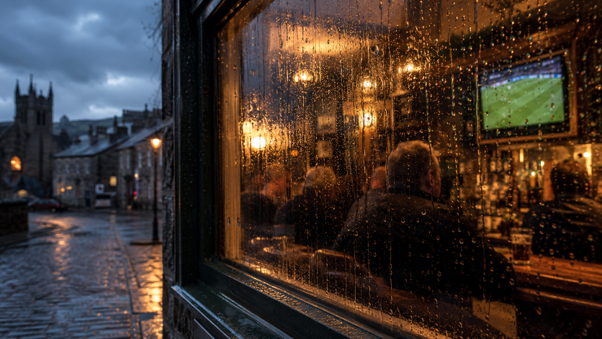
- Quiet documentary images of local life in pubs, chapels and station waiting rooms
The academic language for this is often “place identity” or “landscape as text”: you are not just recording scenery, you are using the environment as a set of symbols that viewers read, consciously or not. By returning to the same paths in different weather, or revisiting a reservoir across seasons, you can build series that explore time and memory rather than single dramatic moments.
Key point
If you design your Haworth trip as a sequence of connected scenes, the village and moors become a flexible film set rather than a checklist of viewpoints, and your images gain narrative weight.
In summary
Haworth and its surroundings offer an unusually dense collection of photographic opportunities. You can start the morning on a cobbled street that featured in classic British cinema, spend midday in a parsonage that shaped literary history, and end the day on a moor that still feels genuinely remote. The same ingredients that attract tourists, filmmakers and literary pilgrims make the area ideal for fine art photographers who want strong atmosphere without travelling far between locations.
With thoughtful planning, respect for the weather and the land, and a clear sense of the story you want to tell, you can leave Haworth with more than a hard drive full of pretty views. You can come away with a coherent body of work that does justice to one of England’s most quietly dramatic landscapes.
FAQ
Is Haworth suitable for beginner photographers?
Yes. The village itself is very accessible, with plenty of subjects close together, and many classic viewpoints are on well-marked paths. The moors demand basic hill sense, but not advanced mountaineering skills.
When is the best time of year to photograph Haworth?
Late summer and early autumn give you heather on the moors and softer light, while winter can produce snow and low sun for high-contrast work. Spring tends to be wetter and windier, which is excellent for dramatic skies.
Do I need a car to reach the best locations?
A car helps for reservoirs and Thornton, but you can cover Main Street, the parsonage, Penistone Hill, Brontë Waterfall and even Top Withens on foot from Haworth if you are comfortable with longer walks.
Can I shoot at dawn or after dark?
You can, but plan carefully. Check sunrise and sunset times, carry a headtorch and let someone know your route if you are heading onto the moor. In the village, be discreet and respectful when using tripods at night.
Are drones allowed around Haworth?
Rules change, but in general you must follow UK Civil Aviation Authority regulations and respect local restrictions, especially near the railway and over crowds. Always check current guidance before flying.